
The percentages sit in a spreadsheet that only your R&D lead fully understands. When they are on leave, production waits.
PRODUCT 01 · COSMETIC & PERSONAL CARE
Cosmetic Manufacturing ERP
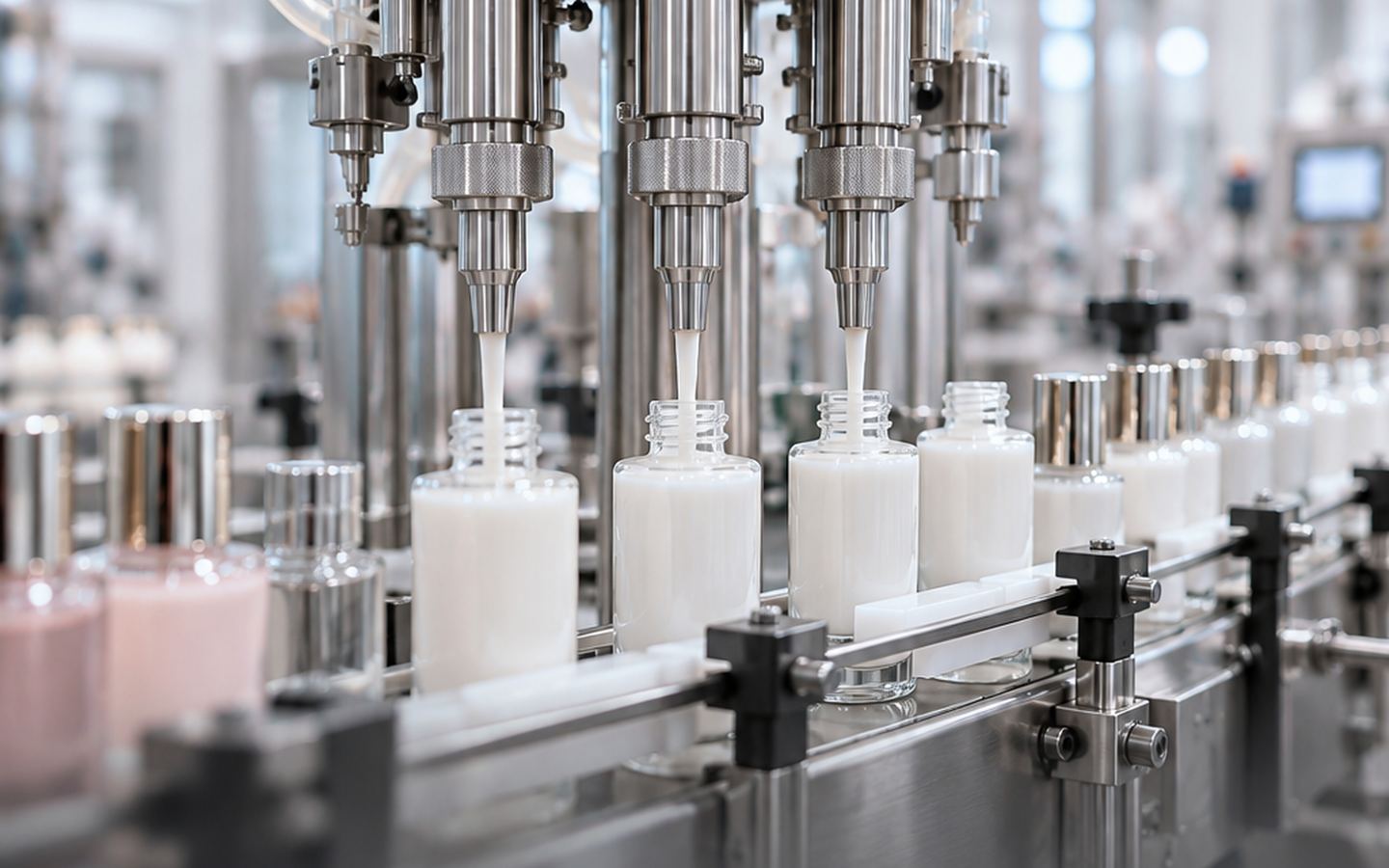
Genzerp is a cosmetic manufacturing ERP for skincare, haircare and colour cosmetics units. Build formulas by percentage, keep separate bills of material for bulk and packaging, and cost each batch as it is made. Every batch carries its lot numbers, QC result and expiry date, so any finished pack traces back to the raw material it came from.
14Connected modules
%Formula-driven BOM
AIBuilt into reporting
Cosmetic Manufacturing ERPLive view
RUNNING
01
Formula approved
02
Batch planned
03
Materials issued
04
Production & QC
05
Packed & coded
06
Costed & shipped
Formula approved
SOUND FAMILIAR?
The four things that slow this business down.
You find out what a batch really cost weeks later, once the fragrance and packaging invoices land. By then you have already quoted the next order.
Manufacturing and expiry dates live on a register. Nobody spots the stock that is about to age out until a customer refuses the delivery.
The batch record, the QC result, the raw-material lot and the supplier COA are in four different places — and someone has to staple them together by hand.
THE WORKING FLOW
How a batch actually moves
This is the path a single production batch takes through Genzerp. Every stage hands the next one its data — nobody re-types anything.
The product formula is stored as percentages, not fixed quantities. Change the batch size and every raw material re-calculates itself.
The system reads the formula, checks raw and packing stock, and tells you what is short before the batch starts — not halfway through.
Raw material is issued against that batch and that batch only. Every kilo is tied to a supplier lot from the moment it leaves the store.
The batch runs, QC records its result against it, and the batch cannot move forward until QC verifies and approves it.
Packing material is consumed, the batch number, manufacturing date and expiry are generated, and finished stock comes into inventory.
Actual material, packing and wastage cost close against the batch. You see the real margin on the order you just shipped.
GENZAI
Ask it about your production
GenzAI reads the data this product already creates. You ask in plain language; it answers with the numbers behind it.
GenzAIConnected to your production data
LIVE
Which batches cost more than they should have?
It compares actual material and packing cost against the formula cost for every batch in the period, then ranks the gaps — so you look at the four batches that moved, not all ninety.
Batches in period92
Over formula cost4
Largest gap6.1%
What is about to expire?
It reads manufacturing and expiry dates across finished stock and flags what is ageing out, how much of it there is, and which customers usually buy that product.
Ageing in 60 days7 lots
Oldest batch14 months
Regular buyers3
Which raw material is holding up production?
It checks planned batches against current RM and PM stock and tells you what will run short, when it will run short, and which purchase order is already covering it.
Short for next batch2 items
Cover runs out11 days
PO already raised1
Ask your business anything…
➤
WHAT YOU GET
What is inside the product
Everything below is part of the same system. There is no separate module to buy, no second login and no export-import between them.
Store each product as a formula with per-ingredient percentages. Scale a batch up or down and quantities follow automatically.
Keep the bulk recipe and the packaging bill separate, the way cosmetics are actually made — one base, many pack sizes.
Trace any finished batch back to the exact raw-material lots and supplier it came from, and forward to every customer it went to.
Manufacturing and expiry dates are generated with the batch. Ageing stock surfaces as an alert, not a surprise.
QC pending, QC verify and QC approved are real states. Stock that has not passed cannot be packed or dispatched.
Raw material, packing, wastage and rework close against the batch, so margin is a number you can see, not estimate.
Separate raw-material and packing-material stores with their own requests, issues, returns and low-stock alerts.
Record what was lost and why. Wastage becomes a trend you can act on rather than a rounding error.
Invoices, payments, ledgers and GST-ready documents built on the same data as production — no second entry, no month-end reconciliation.
Leads, sources, statuses, follow-ups and meetings, so an enquiry and the order it turns into live in one place.
Positions, resumes, onboarding, leave requests and exits, with roles and permissions set per user and per module.
Ask for the numbers in plain language. Order predictions, P&L, consistency, performance and productivity reports come as standard.
WHY IT FITS
Built for cosmetics, not adapted to it
A general-purpose ERP can hold a bill of materials. It cannot tell you that a 200 kg batch and a 500 kg batch of the same cream are the same formula. These are the differences that matter on the floor.
Formulas are percentages, not quantitiesChange the batch size and the system re-calculates every ingredient. No parallel spreadsheet, no manual maths, no transcription error.
One base, many pack sizesThe same bulk batch splits into 50 ml, 100 ml and 200 ml packs, each with its own packaging BOM and its own finished-goods code.
Shade and fragrance are trackedVariants are handled as part of the product, so a shade change does not mean creating a whole new item master from scratch.
The audit file builds itselfBatch record, QC result, material lots and dispatch history stay linked. When an auditor asks, you open one screen.
BEFORE YOU ASK
Questions we get every time.
Can it handle the same product in different pack sizes?
Yes. The bulk formula and the packaging bill are separate, so one base batch can split into as many pack sizes as you sell, each with its own code and its own packaging consumption.
Do we have to move our existing formulas in by hand?
No. Products, formulas, raw materials, vendors and customers can be brought in through bulk upload, and our team does the first load with you during setup.
Can it work alongside our existing accounting software?
Yes. Genzerp covers production, stock, quality and costing, and can pass the resulting documents to the accounting package you already use rather than replacing it.
Does it support batch-wise GST invoicing and e-way bills?
Dispatch documents carry the batch, quantity and value, and are built to match Indian GST invoicing. Tell us your exact filing setup and we will confirm the fit before you commit.
How long does implementation take?
It depends on how many products, formulas and users you are bringing across. Because the system already understands cosmetic manufacturing, most of the work is loading your data rather than building features.
Can we run it on our own server?
Yes. It runs on our cloud or on your own server, whichever your compliance and IT policy requires.
THE REST OF THE RANGE
Other products we build.
🧵
Textile Manufacturing ERP
Job work, dyeing and lot-wise shade tracking.
🪑
Furniture Manufacturing ERP
Cutting lists, job cards and assembly tracking.
📦
FMCG Manufacturing ERP
Batch production, distributors, schemes and expiry.
⚙️
PVC Manufacturing ERP
Compounding, extrusion, scrap and regrind.
⚕️
Healthcare ERP
Pharmacy stock, purchase, billing and compliance.
🏬
CRM for Retail
Customer profiles, loyalty and campaigns.
🛒
POS for Franchise
Multi-outlet billing, transfers and settlements.
🧺
ERP for Laundry Business
Order intake, garment tagging and delivery.
See it running on your numbers.
Bring one real product and one real batch. We will show you exactly how it would look in Genzerp — not a generic demo.