
Grey cloth goes to the process house on a challan and comes back weeks later. What went, what returned and what was lost sits in someone's notebook.
PRODUCT 02 · TEXTILE & FABRIC
Textile Manufacturing ERP
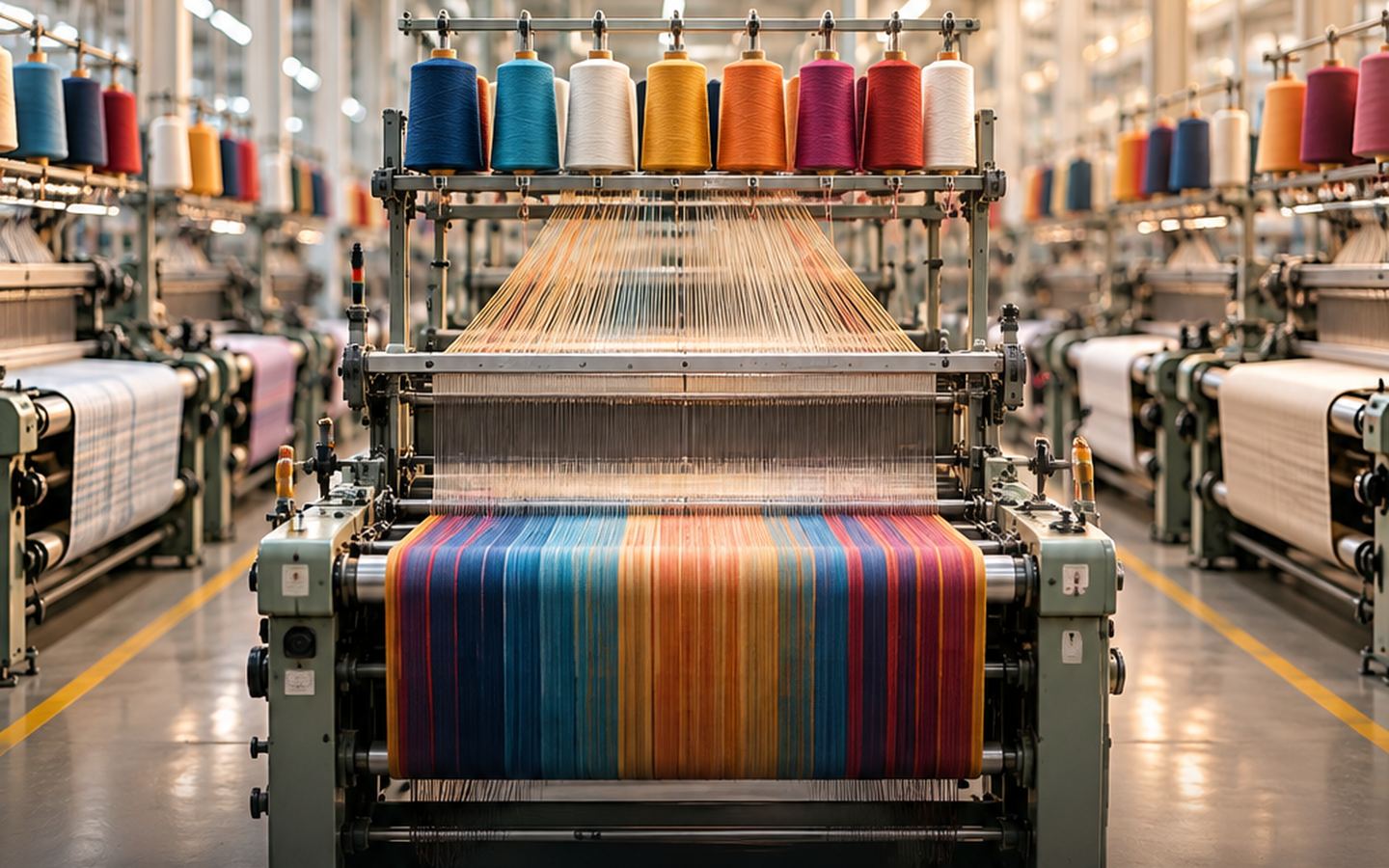
Genzerp is a textile manufacturing ERP for weaving, dyeing and processing units. Track every lot from grey fabric to finished roll, issue job work challans to process houses and reconcile what comes back against what went out. Stock is held shade-wise and lot-wise, and costing works per metre with shortage and wastage included.
14Connected modules
LotLevel traceability
AIBuilt into reporting
Textile Manufacturing ERPLive view
RUNNING
01
Yarn or grey in
02
Production planned
03
Job work issued
04
Process & QC
05
Received & graded
06
Packed & dispatched
Yarn or grey in
SOUND FAMILIAR?
The four things that slow this business down.
Two lots of the same shade come back slightly different. Nobody knows which lot went to which customer until the complaint arrives.
Yarn rate, job work charges, wastage and rejections land at different times, so the cost of a finished roll is an estimate months later.
Some at the mill, some at the process house, some in the godown. The stock report only knows about one of them.
THE WORKING FLOW
How a lot actually moves
This is the path a single lot takes through Genzerp, including the weeks it spends outside your own walls.
Yarn and grey fabric are received against a lot number, with supplier, quality and rate attached from the start.
The order is broken into lots and processes, and the system tells you what yarn and grey each lot needs before work starts.
Material going to a process house leaves on a challan against that lot, so what is outside your walls is still on your stock report.
Dyeing, printing or finishing is recorded against the lot, with shade approval and rejection captured before it can move on.
Returned fabric is booked back with actual metres, grade and shortage, so job-work loss becomes a number instead of a feeling.
Finished rolls are packed with lot and shade on the label, and dispatch carries both straight through to the invoice.
GENZAI
Ask it about your lots
GenzAI reads the data this product already creates. You ask in plain language; it answers with the numbers behind it.
GenzAIConnected to your production data
LIVE
Which job worker is losing the most material?
It reconciles every challan issued against what came back, processor by processor, and ranks them on shortage percentage rather than on total volume.
Processors6
Lots reconciled128
Worst shortage3.4%
Which lots are still lying outside?
It lists grey and semi-finished stock sitting at process houses, how long each lot has been out, and which sales order is waiting on it.
Lots outside19
Oldest42 days
Orders waiting5
What is my real cost per metre?
It closes yarn, job work, wastage and rework against each lot and shows cost per metre by quality, rather than one blended figure.
Qualities11
Lots closed96
Spread14%
Ask your business anything…
➤
WHAT YOU GET
What is inside the product
Everything below runs on the same connected core. There is no separate module to buy and no export between them.
Every metre carries its lot from yarn to dispatch, so a shade complaint traces back to the exact batch and process house.
Issue, receive and reconcile job work with outside processors, with pending challans visible at all times.
Shade approval, grade assignment and rejection are recorded against the lot before it can move forward.
Separate stock for yarn, grey and finished goods, each with its own movements and low-stock alerts.
Dyeing, printing, washing and finishing as defined stages, so you always know which lot is at which stage.
Yarn, job work, wastage and rework close against the lot, giving a real cost per metre instead of a blended average.
Record what went out and what came back. Process loss becomes a trend per job worker rather than an argument.
Sales orders reserve lots, and dispatch documents carry lot, shade and metres without anyone re-typing them.
Invoices, payments, ledgers and GST-ready documents built on the same data as production — no second entry, no month-end reconciliation.
Leads, sources, statuses, follow-ups and meetings, so an enquiry and the order it turns into live in one place.
Positions, resumes, onboarding, leave requests and exits, with roles and permissions set per user and per module.
Ask for the numbers in plain language. Order predictions, P&L, consistency, performance and productivity reports come as standard.
WHY IT FITS
Built for job work, not just in-house production
Most textile systems assume you make everything under one roof. Very few businesses do. The difference that matters is what happens to material once it leaves your gate.
Material outside your walls is still yoursStock at a process house stays on your books with its own ageing, so nothing disappears between challan and return.
Shade is part of the identityA lot is not just a quantity, it is a shade. The two stay together from the dyeing house to the customer complaint.
Metres out and metres in are reconciledEvery job work return is booked against what was issued, so shortage is measured per processor and per lot.
One order, many lotsA single sales order can be filled from several lots without losing track of which customer received which shade.
BEFORE YOU ASK
Questions we get every time.
Can it handle job work to outside process houses?
Yes, and that is the core of it. Material leaves on a challan, stays on your stock report while it is out, and is reconciled against what comes back, per lot and per processor.
Do you support lot and shade wise stock?
Yes. A lot carries its shade through every process, so finished stock, dispatch documents and any later complaint all point at the same lot.
We do both manufacturing and trading. Does that work?
Yes. Traded goods can be received and sold without going through production stages, while manufactured lots follow the full process route.
Can it calculate a real cost per metre?
Yes. Yarn, job work charges, wastage and rework close against the lot, so cost per metre is actual rather than a standard rate applied afterwards.
Will it work alongside our existing accounting software?
Yes. Genzerp covers production, lots, stock and costing, and can pass the resulting documents to the accounting package you already use.
Can we run it on our own server?
Yes. It runs on our cloud or on your own server, whichever your IT policy requires.
THE REST OF THE RANGE
Other products we build.
💄
Cosmetic Manufacturing ERP
Formulation, batch costing and shelf-life control.
🪑
Furniture Manufacturing ERP
Cutting lists, job cards and assembly tracking.
📦
FMCG Manufacturing ERP
Batch production, distributors, schemes and expiry.
⚙️
PVC Manufacturing ERP
Compounding, extrusion, scrap and regrind.
⚕️
Healthcare ERP
Pharmacy stock, purchase, billing and compliance.
🏬
CRM for Retail
Customer profiles, loyalty and campaigns.
🛒
POS for Franchise
Multi-outlet billing, transfers and settlements.
🧺
ERP for Laundry Business
Order intake, garment tagging and delivery.
See it running on your numbers.
Bring one real product and one real batch. We will show you exactly how it would look in Genzerp — not a generic demo.